
From Storage Unit to Spare Room: How to Reclaim Rental Storage Spaces
The Team at Junk Rescue • April 9, 2026

Let's talk about that monthly bill you keep paying.


You know the one. The storage unit. You signed up for it "temporarily" when you moved, or when you needed to clear out the guest room for a new baby, or when your parents downsized and you weren't ready to sort through their things.


That was two years ago. Or five. Or ten.


And every month, the automatic payment comes out, and you tell yourself you'll deal with it next weekend. Except next weekend never comes.


We've walked into hundreds of storage units just like yours. Some are tidy. Some are chaos. All of them are costing you money for stuff you're not using.


Here's how to take it back.

The Real Cost of a Storage Unit


Before we talk about how to clean one out, let's do some math.


Let's say you're paying $100 a month for a 10x10 unit. That's $1,200 a year. Over five years, that's $6,000.


Now, be honest: is there $6,000 worth of stuff in there? Or are you paying $6,000 to store boxes you haven't opened in half a decade?


We're not saying every storage unit is a waste. Sometimes you genuinely need temporary space—during a move, a renovation, a life transition. But if "temporary" turned into "years," it might be time to rethink.

Step 1: Triage Before You Go


Don't just show up at the storage unit with a trash bag and hope for the best. That's how you get overwhelmed and leave with the same stuff you came with.


Use our 4-step triage system before you even unlock the door:


Keep – What actually belongs in your life? Heirlooms, tax documents, tools you use, seasonal items you love. These come home with you.


Donate – Usable furniture, clothing, kitchen items, books. If it's in good shape and someone else could use it, set it aside for Habitat for Humanity, Crisis Assistance Ministry, or The Salvation Army.


Recycle – Electronics, scrap metal, cardboard, glass. These materials can be salvaged.


Dispose – Broken stuff, mildewed boxes, mystery items that have seen better days. The stuff that's truly done.


Work in sections. Pull everything out into piles. Don't try to sort inside the unit—you'll need space to move.

Step 2: Call in Backup


Here's the thing about storage units: they're often on upper floors. Or at the back of a facility. Or filled with furniture that was hard to get in there in the first place.


Getting it out is just as hard.


That's where we come in.


You can do the sorting yourself if you want—that's a great way to save money and reconnect with your stuff. Or you can point us at the unit and let us handle the whole thing. We'll sort, haul, donate, recycle, and dispose. You just hand over the key.


We can often give you a ballpark price just from photos you send to our 24/7 junk hotline at 1-800-JUNK-911. Then we'll meet you at the unit, confirm the price, and get to work.

Step 3: Don't Forget the Donation Path


This is the part that makes people feel good.


That old dresser your aunt gave you that you never really liked? Someone else will love it. Habitat for Humanity will sell it and use the money to build homes.


Those bags of clothes you've been meaning to take to Goodwill but never did? Crisis Assistance Ministry or The Salvation Army will get them to families who need them.


That working mini-fridge from your college apartment? Somebody starting out with nothing will be thrilled to have it.


When you choose Junk Rescue, we deliver your donations to these local partners. You don't have to load your car, find the donation center, or wait in line. We do it all.


And while we can't provide tax receipts ourselves (that's up to the nonprofit), the organizations we donate to will often give you one directly.

Step 4: What About the Stuff That's Not Worth Keeping?


Okay, so you've pulled out the keep pile and the donate pile. Now you're left with... everything else.


Electronics? We recycle them. Lithium batteries? Handled separately and safely. Cardboard and paper? Recycled. Glass and scrap metal? Sent to the right facilities.


And the stuff that's truly broken, mildewed, or beyond saving? That gets disposed of properly. We don't take that step lightly, but sometimes it's the only option.


Our goal is to keep as much as possible out of the landfill. That's the "save" part of what we do.

Step 5: Enjoy Your Freedom


Once the unit is empty, you can finally cancel that monthly payment. That's money back in your pocket every single month.


And the stuff you kept? It's now in your home, where it belongs—or organized in a way that actually makes sense.


No more paying to store things you don't use. No more guilt about "dealing with it someday." No more avoiding the topic when your partner asks about the storage bill.


Just a clean slate.

What a Storage Cleanout Often Looks Like


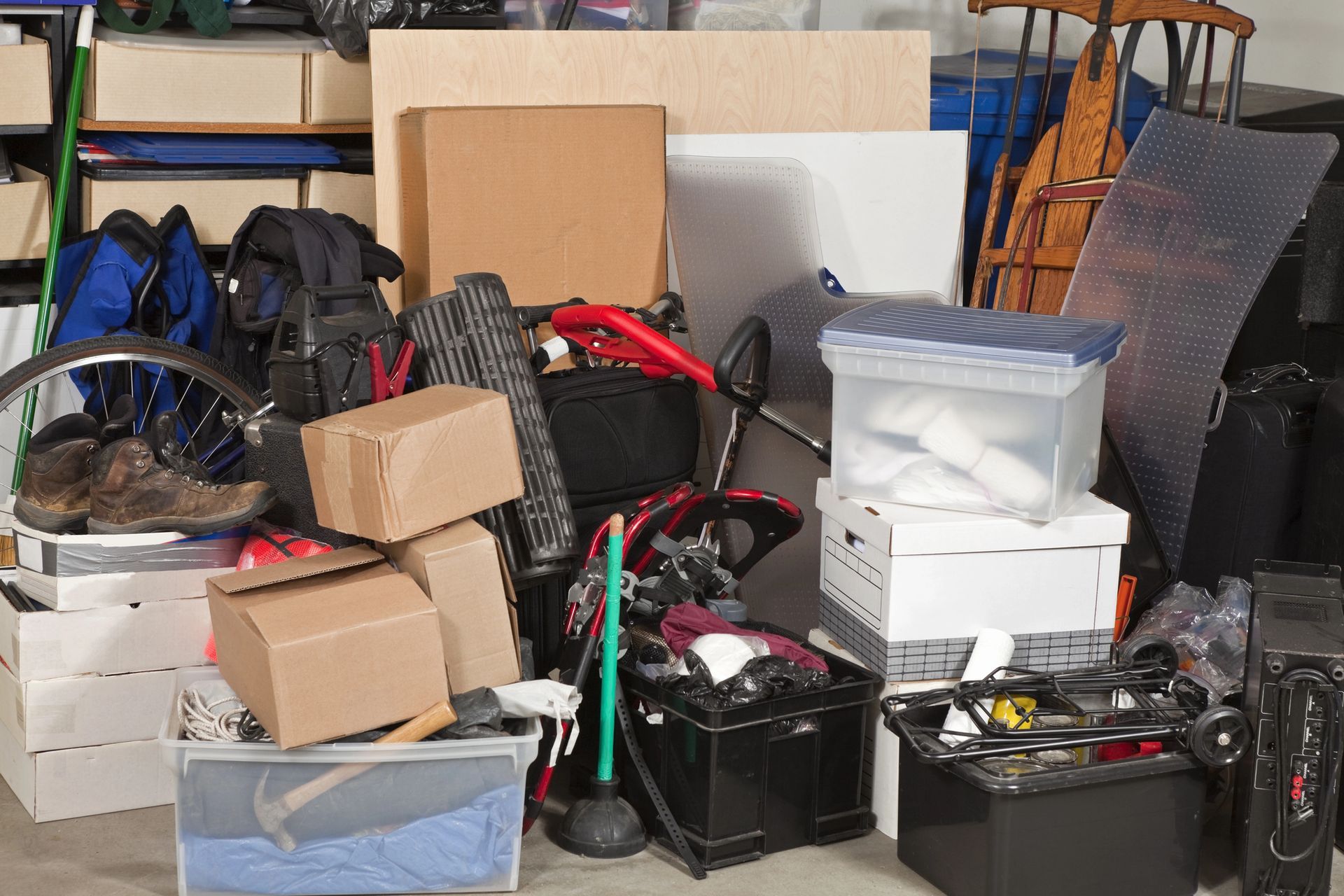
Picture a typical storage unit. Maybe it's a 10x10 or 10x15, renting for around $100 to $150 a month. The renter signed up during a life transition—a move, a divorce, a death in the family—and the "temporary" plan stretched into years.


Let's say it's a 10x15 unit at $140 a month. After seven years, that's nearly $12,000 spent on storage.

Inside, you'll often find a mix of:


  • Outgrown kids' clothes and toys
  • Broken or dated furniture that was too hard to part with at the time
  • Boxes of old paperwork, receipts, and tax records
  • Exercise equipment that never got used
  • Seasonal decorations from multiple houses ago
  • Mystery boxes that haven't been opened since they were packed


When we get called in, we sort it all. Usable clothes and household goods go to Crisis Assistance Ministry or The Salvation Army. Furniture in good shape goes to Habitat for Humanity. Electronics and recyclables get salvaged. The truly broken or outdated stuff gets disposed of properly.


And at the end of the day, the renter cancels the unit. That monthly payment—$140, maybe more—stops. No more bill. No more guilt. Just a clean slate and money back in their pocket every month.


That's the outcome we're after—every time.

Ready to Reclaim Your Storage Unit?


You don't have to do it alone. Call our 24/7 junk hotline at 1-800-JUNK-911 or click below for a free quote.


Send us a few photos of the unit, and we'll give you a ballpark. Then we'll meet you there, confirm the price, and get to work.


We'll sort, haul, donate, recycle, and dispose. You'll get your space back—and your monthly payment back.


No judgment. Just help.

Recent Posts

A large, blue construction dumpster filled with trash and a wooden cabinet, hitched to a truck outside a house.
By The Team at Junk Rescue April 6, 2026
So you've finally decided to tackle that pile in the garage. Or that couch that's been sitting on the porch for weeks. Or the whole house you inherited that needs to be cleared out. You pick up your phone, search for "junk removal near me," and suddenly you've got a dozen options. How do you choose? Not all junk removal companies are created equal. Some will dump everything in a landfill without a second thought. Some will give you a vague price over the phone and then double it when they show up. Some won't show up at all. And some—the truly illegitimate ones—might even dump your stuff illegally on a back road or in an abandoned lot, leaving you on the hook if it's traced back. We've been doing this in Charlotte since 2009, and we've heard every horror story. So we put together five questions you should ask before hiring anyone—including us.
March 31, 2026
Ever wonder what it's actually like to do what we do? We get that question a lot. People see the truck roll up, watch us haul out a couch or clean out a garage, and they're curious. What's the weirdest thing you've found? What's the heaviest? Do you ever get called to something really wild? So we figured we'd pull back the curtain a little. Here's what a real day looked like for one of our crews recently—times, locations, and all. Spoiler: it's never boring.
A box of clothes on a bed in a room with an open wardrobe filled with hanging garments.
By The Team at Junk Rescue March 21, 2026
Let's talk about something that doesn't get discussed enough.  Most of us have that one closet. Or that corner of the basement. Or that garage shelf where stuff just... accumulates. Magazines we meant to read. Projects we meant to finish. Boxes we never unpacked. That's normal. Life gets busy, and clutter happens. But there's a difference between a messy garage and something more serious. And understanding that difference matters—not just for getting your space back, but for getting the right kind of help. At Junk Rescue , we've been walking into Charlotte homes since 2009. We've seen every version of "too much stuff." And we've learned that the right approach starts with understanding what we're looking at.
Pile of trash, including bags, wood scraps, and a blue pool float, in a grassy yard.
By The Team at Junk Rescue March 10, 2026
So here's a question we hear all the time: "Can't you just throw this in the dumpster?"  And look, we get it. When you're knee-deep in a garage cleanout or staring down a basement full of stuff you didn't even know you had, the easiest thing in the world is to just want it all gone. One pile. One truck. Done. But after 15 years of doing this, we've learned something: not everything belongs in a landfill. Some stuff is actually valuable. Some stuff is straight-up hazardous. Some stuff has materials that can live a second life. And some stuff—believe it or not—is actually illegal to toss in the regular trash here in Mecklenburg County. At Junk Rescue , we started with a simple question back in 2009: What if junk removal could be about more than just hauling stuff to the dump? What if we could actually recover things instead? That question stuck. And it's still how we think about every single job. So before you drag that pile to the curb, here are five things you should never throw in a landfill—and what to actually do with them.