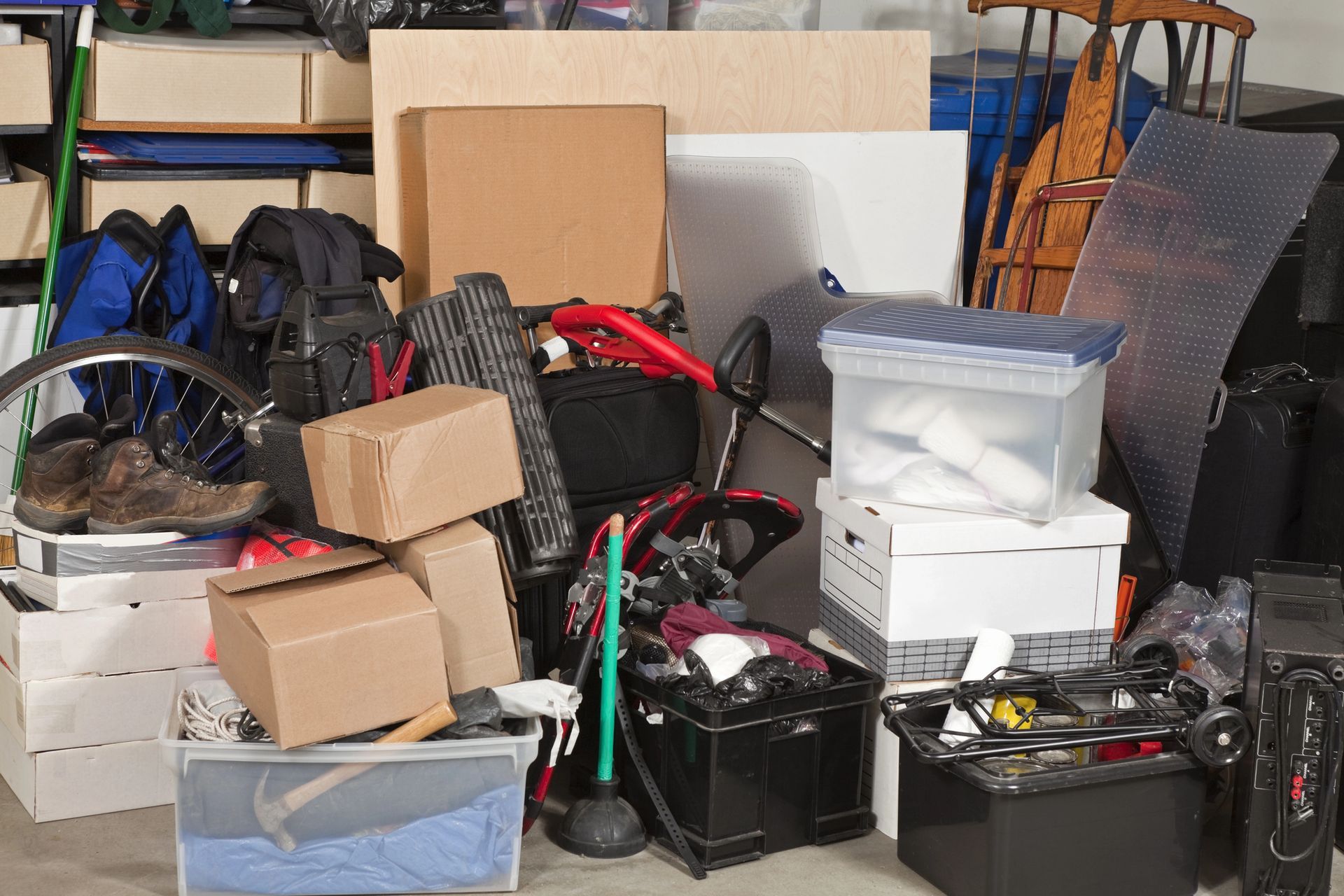
If you've ever driven to Charlotte to pick up your college student in May, you know the scene.
Dumpsters are overflowing. The curb looks like a furniture store exploded. And somewhere under that pile is your kid's mini‑fridge, their desk lamp, and three bags of clothes they swear they need.
Move‑out weekend at UNC Charlotte, Queens, Johnson & Wales, and the other campuses around town is chaos. Students are stressed. Parents are exhausted. And everyone just wants to be done.
But here's the thing: a lot of that stuff still has life left in it. And it doesn't have to end up in a landfill or scattered across the sidewalk.
Here's how to handle move‑out season without losing your mind.
The Opposite of a Circular Economy
Most of us grew up with a linear economy. You know the pattern:
Take → Make → Use → Throw away
We take raw materials from the earth. We turn them into products. We use them for a while. Then we throw them in a landfill.
That's it. The end. All that energy, all those resources, gone.
The problem is, we're running out of places to put the "throw away" part. Landfills fill up. Resources get scarce. And the planet heats up.
The circular economy flips the script.
What a Circular Economy Looks Like
Instead of a straight line, it's a loop.
Take → Make → Use → Recover → Remake → Use again
In a circular economy, there's no "away." Everything is designed to be reused, repaired, recycled, or composted. Waste becomes food for something else.
Think about a glass bottle. In a linear economy, you drink the soda and throw the bottle in the trash. In a circular economy, that bottle gets washed, refilled, and used again. Or it gets crushed, melted, and turned into a new bottle.
Same with a couch. In a linear economy, it ends up in a landfill. In a circular economy, someone donates it, someone else buys it for cheap, and it stays in use for years longer.
That's the goal.
Where Your Junk Fits In
Here's the good news: you don't need to wait for big corporations or government policies to start participating. You're already doing it when you make smart choices about your unwanted stuff.
At Junk Rescue, we built our whole process around the circular economy. We just call it something simpler: Respond, Rescue, Save, Restore.
When you call us, we don't just haul everything to the dump. We sort through your pile and ask: what can be kept in the loop?
The 4-Step Triage in a Circular Economy
Keep – The most circular option is to keep using what you already have. That vintage chair? It's already in the loop. Don't break the loop unless you have to.
Donate – This is the heart of the circular economy for household goods. That mini‑fridge from your kid's dorm? Someone else will use it for years. That couch you're tired of? A family getting on their feet would love it.
We donate usable furniture to Habitat for Humanity. Clothing and home goods go to Crisis Assistance Ministry or The Salvation Army. Your junk becomes someone else's treasure.
Recycle – When an item can't be reused, we salvage its materials. Glass becomes new glass. Metal becomes new metal. Cardboard becomes new cardboard. Electronics get broken down for their copper, gold, and rare earth minerals. Even lithium batteries get recovered.
Dispose – Only when something is truly broken, contaminated, or impossible to recycle does it leave the loop. That's the last resort, not the first option.
A Real-World Example: That Old Sofa
Let's follow a sofa through the circular economy.
In a linear economy, it goes to the landfill. Buried. Done.
In a circular economy, you call Junk Rescue. We pick it up. It's in decent shape, so we take it to Habitat for Humanity. A family buys it for a fraction of what a new sofa would cost. They use it for five more years.
Eventually, that sofa wears out. The next owner calls us again. This time, it's not fit for donation. But the wood frame can be recycled. The metal springs can be melted down. The foam can be turned into carpet padding.
Almost nothing goes to waste.
That's the loop.
Why It Matters for Charlotte
We live in a growing city. More people, more apartments, more furniture, more electronics, more stuff. Landfills around Mecklenburg County aren't getting any bigger.
Every couch we keep out of the landfill, every mini‑fridge we donate, every TV we recycle—it all adds up. It means less pollution, fewer resources mined from the earth, and more help for local families who need affordable furniture and clothes.
Plus, it just feels better. Knowing your old stuff isn't sitting in a hole somewhere—it's helping someone else—is a good feeling.
How You Can Join the Circular Economy Today
It doesn't take much.
- Don't automatically throw things away. Ask: could someone else use this?
- Donate usable items instead of trashing them.
- Recycle electronics, batteries, and scrap metal.
- Call a junk removal service that sorts instead of dumping.
That last one is where we come in.
We'll come to your home or business in Charlotte, look at your pile, and give you a straight price. Then we'll sort everything—keep, donate, recycle, dispose. You don't have to figure out where the nearest recycling center is or whether Habitat is taking donations today.
We do it all. You just point.
Ready to Close the Loop?
Give us a call at 1-800-JUNK-911 or click below. Send us a few photos, and we'll give you a ballpark price. Then we'll come out, haul it away, and make sure your junk stays in the loop—not the landfill.
No judgment. Just help.
Recent Posts